Photographs by Obiet Wicaksono. Fieldwork and captions by Dr Ekoningtyas Margu Wardani. Both are contributors to Geni Lintang.
Selected frames from a documentary project on adat-based food sovereignty and indigenous-led climate resilience, made across 24 villages in East Nusa Tenggara, in February 2026. Fieldwork was conducted during the final evaluation of Yayasan Mitra Tani Mandiri's Integrated Village Development Programme (PDT), with Caritas Australia and DFAT/ANCP.
Across these villages, the customary institutions that govern food, water, livestock, and forest are not folklore. They are a working climate solution, already being lived.
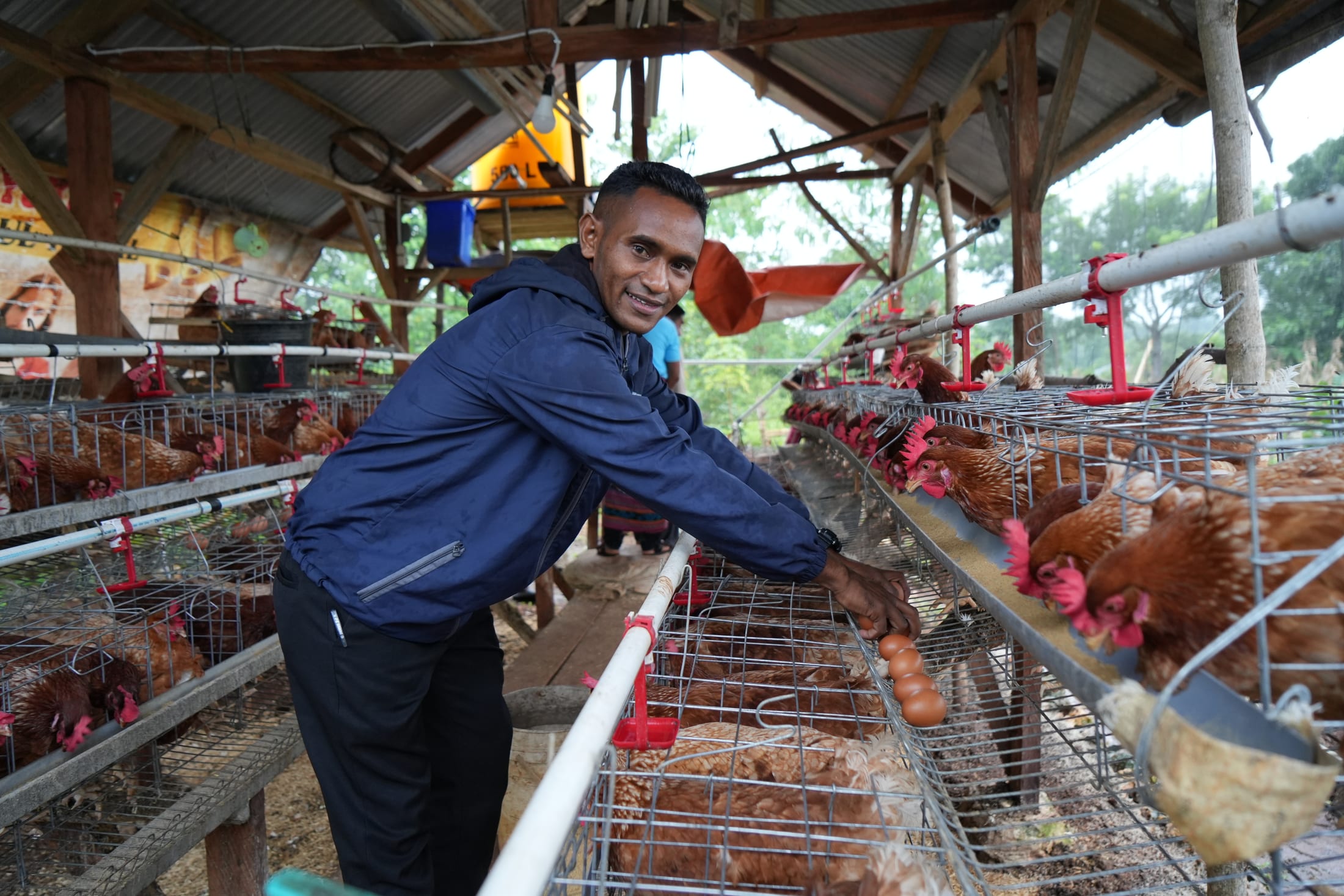
A community poultry group in East Nusa Tenggara, February 2026. Household food security in the simplest form possible.
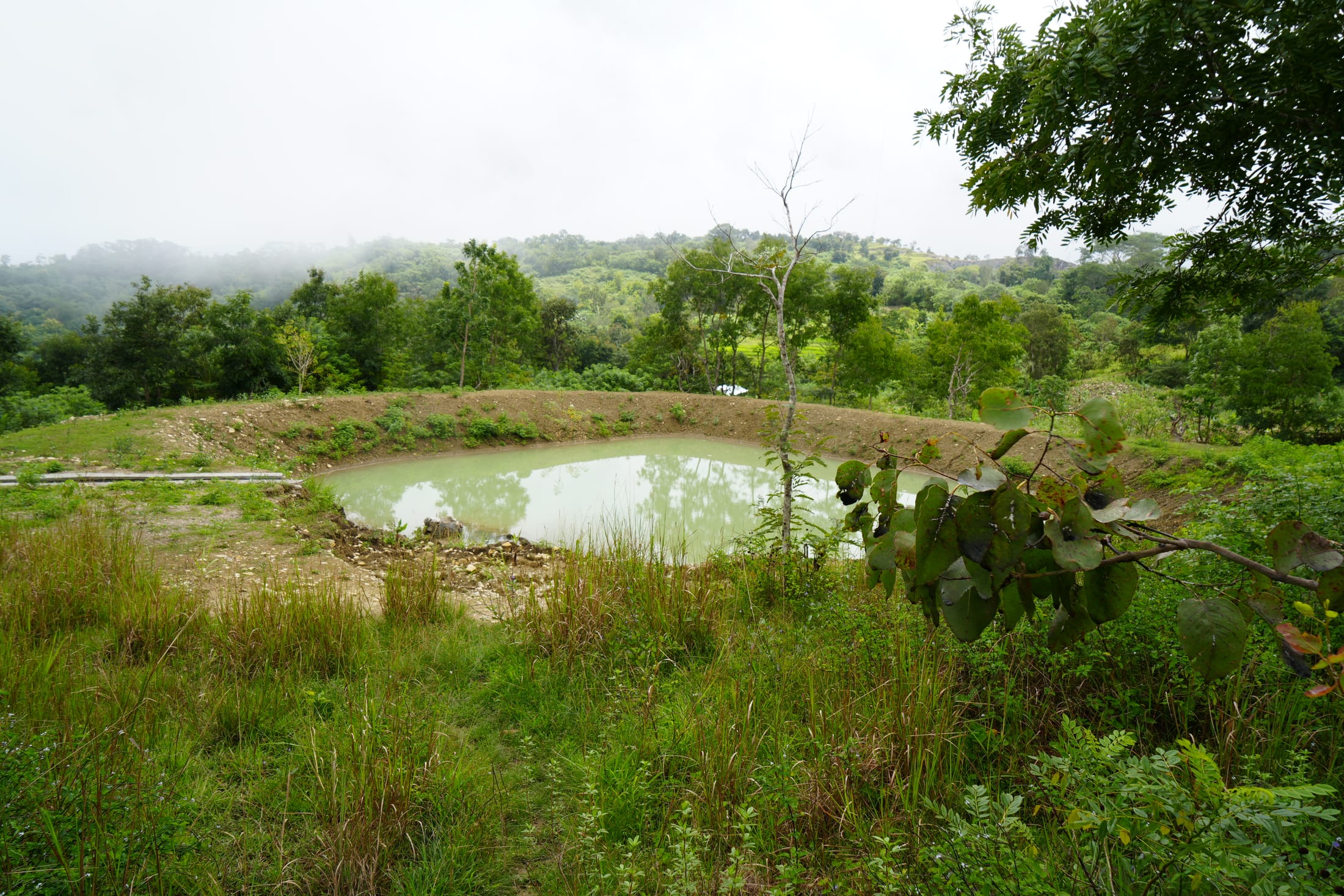
A Bulan Senyum ("Crescent Moon") water-harvesting pond, February 2026. Endorsed by the provincial disaster agency BPBD-NTT, the community-built rainwater terracing has extended household water availability from six to ten or more months in eight of the 24 study villages, a working answer to the "aridity crisis" framing that has dominated NTT policy for decades.
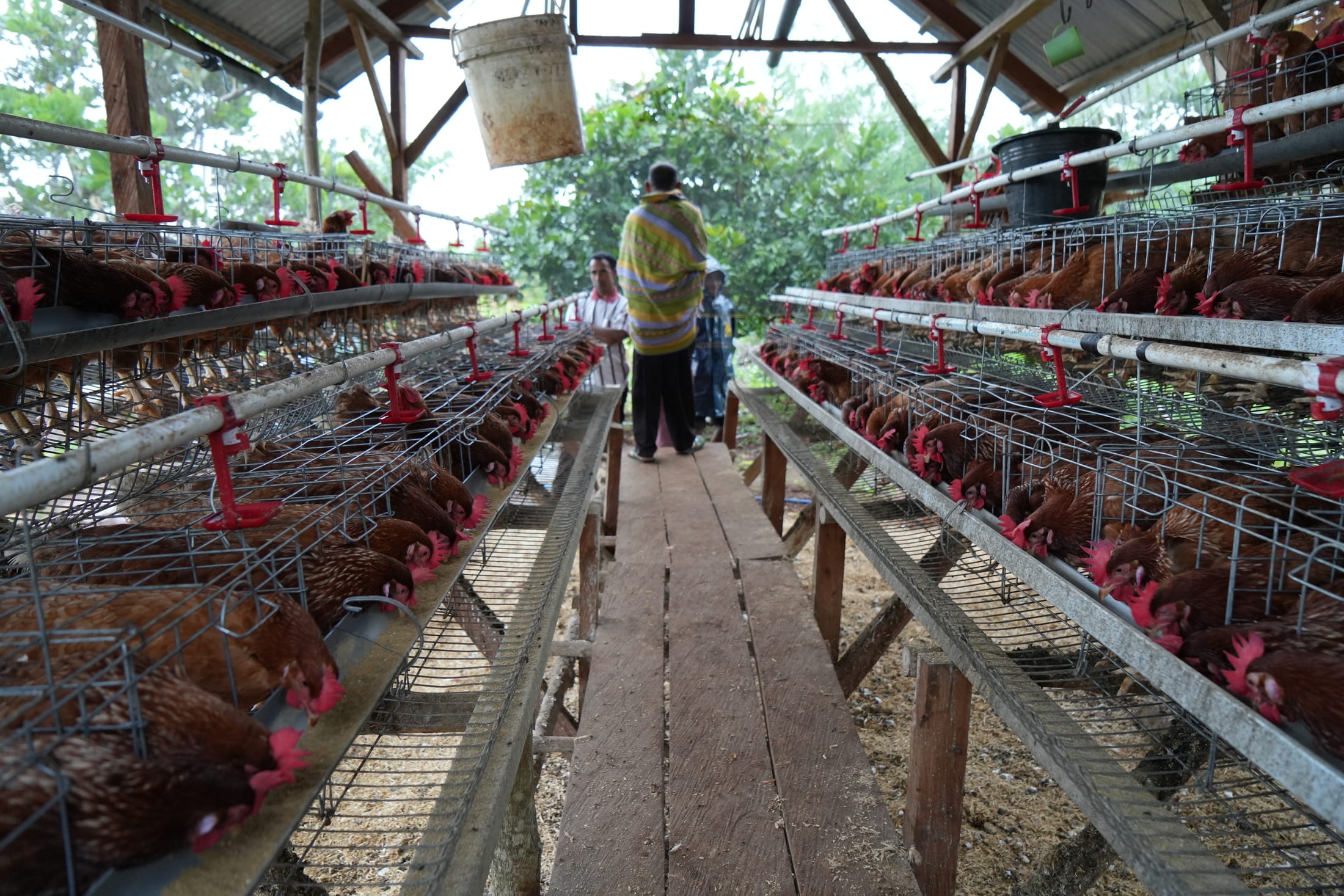
A community savings-group poultry enterprise, February 2026.
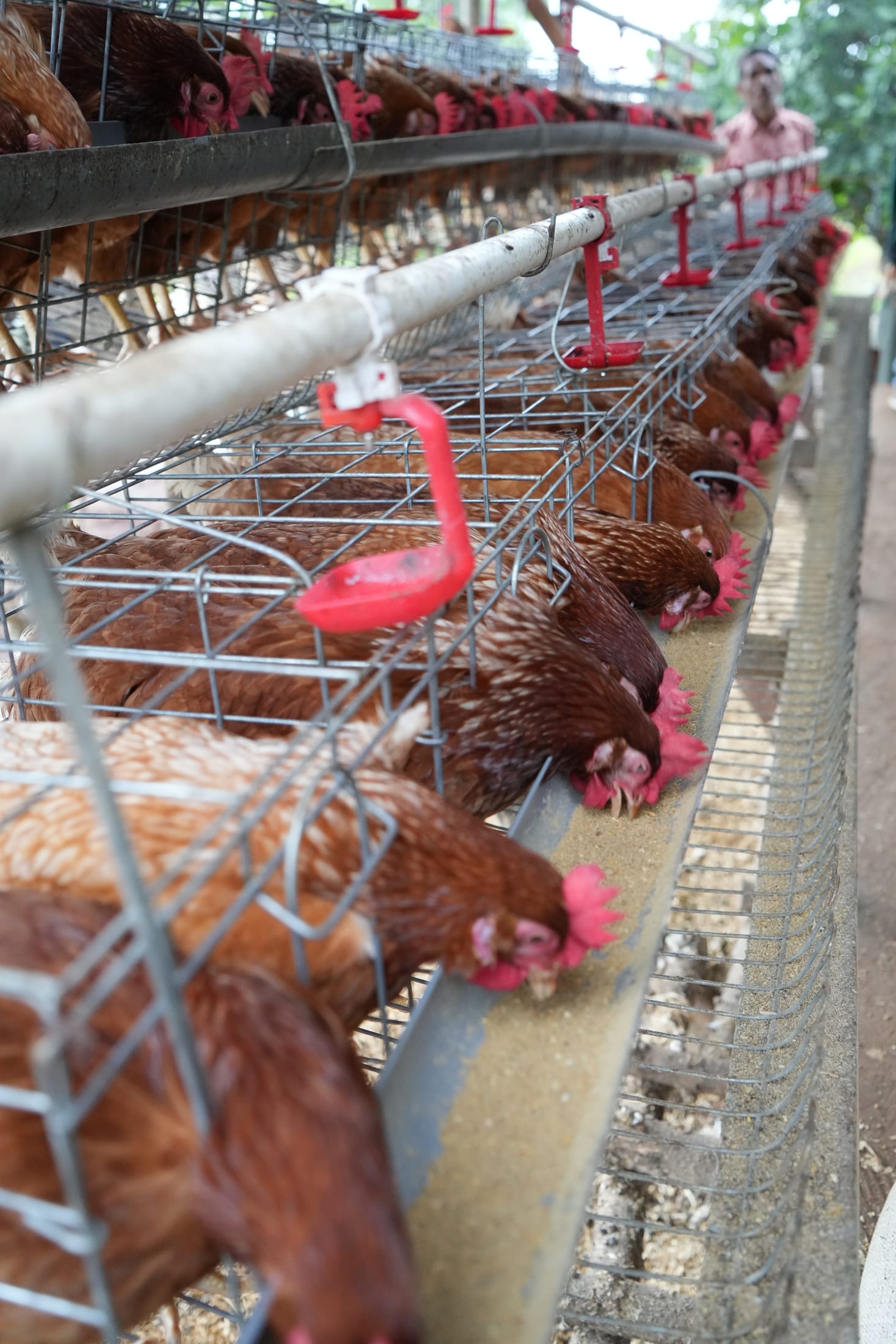
Laying hens, February 2026. Egg production is one of several income streams for the community groups.
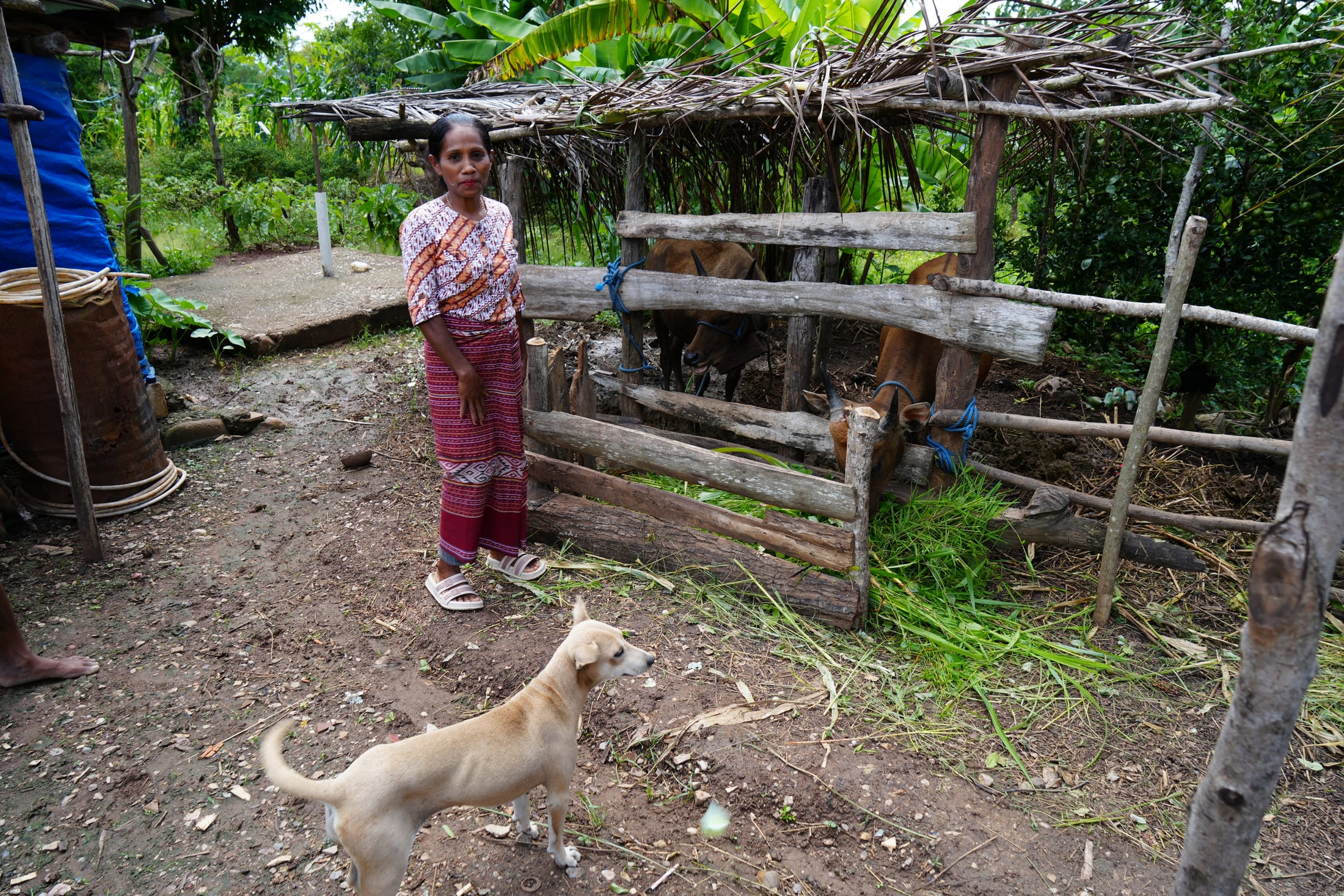
A Tetun woman at her household livestock pen, February 2026. The cattle and small livestock visible here redistribute protein across kin lines during the NTT dry season.
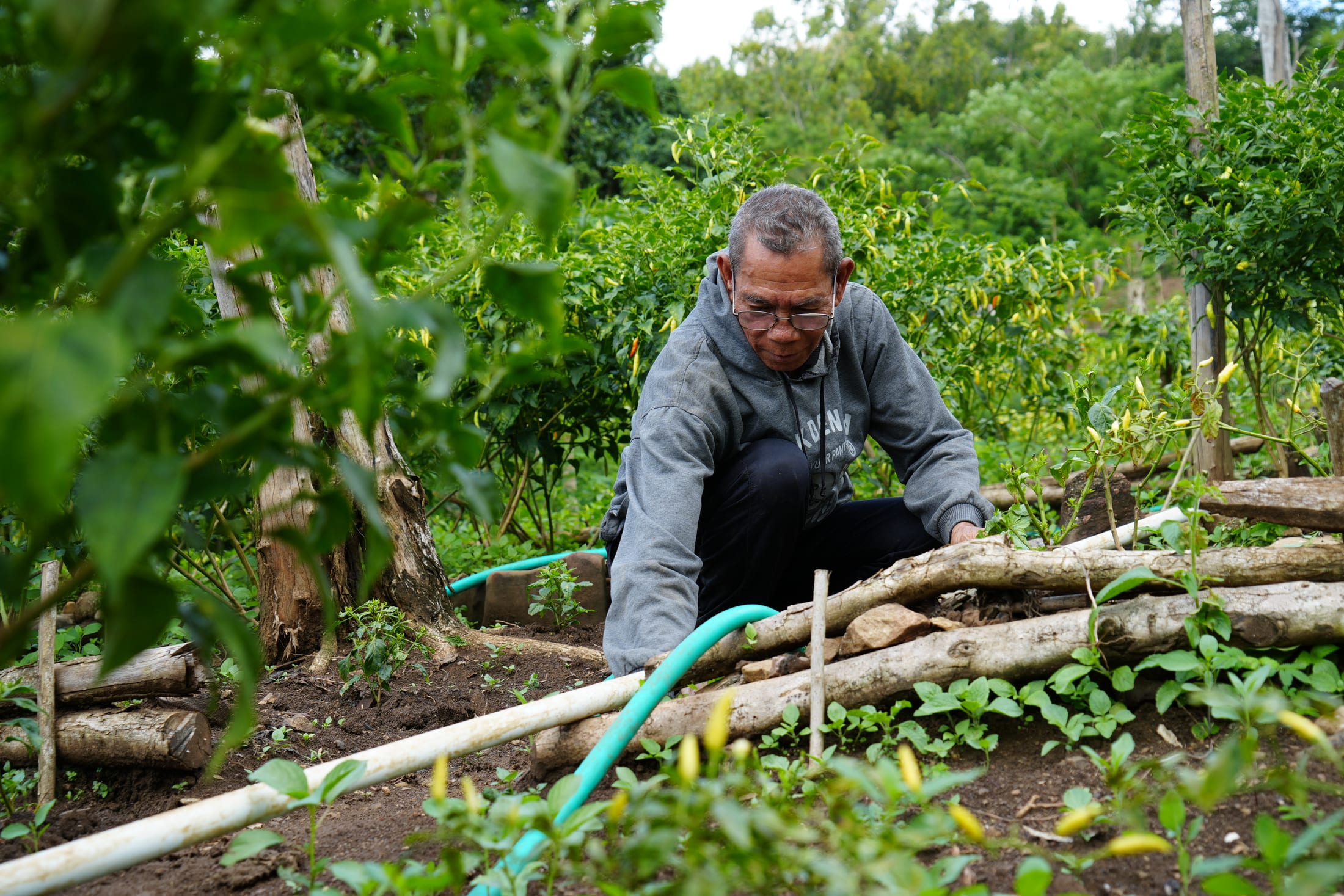
A bapa tending a chilli row in a household kebun tetap (permanent food garden), February 2026. The bamboo and timber armature visible in the frame is built and replaced by households as part of the permanent-garden system, labour that the formal agricultural-extension service does not record but the customary council does.
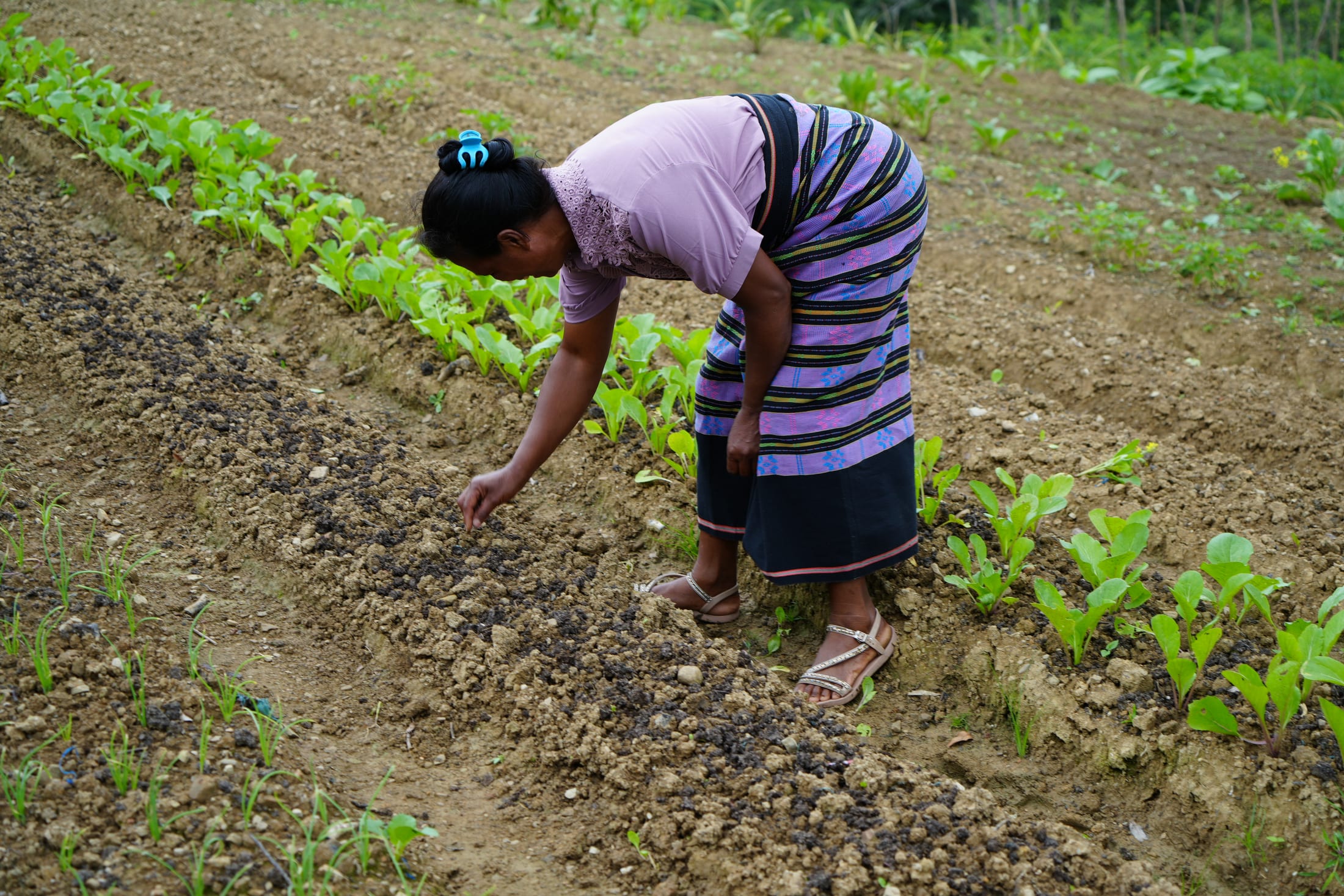
A mama planting seedlings into the prepared rows of her household kebun tetap, February 2026. The permanent-garden system integrates fruit, fodder, fuelwood, and indigenous food crops, and is maintained almost entirely by household labour. Across the 24-village network, 58.7 per cent of the 1,453 community savings-group members carrying this work are women.
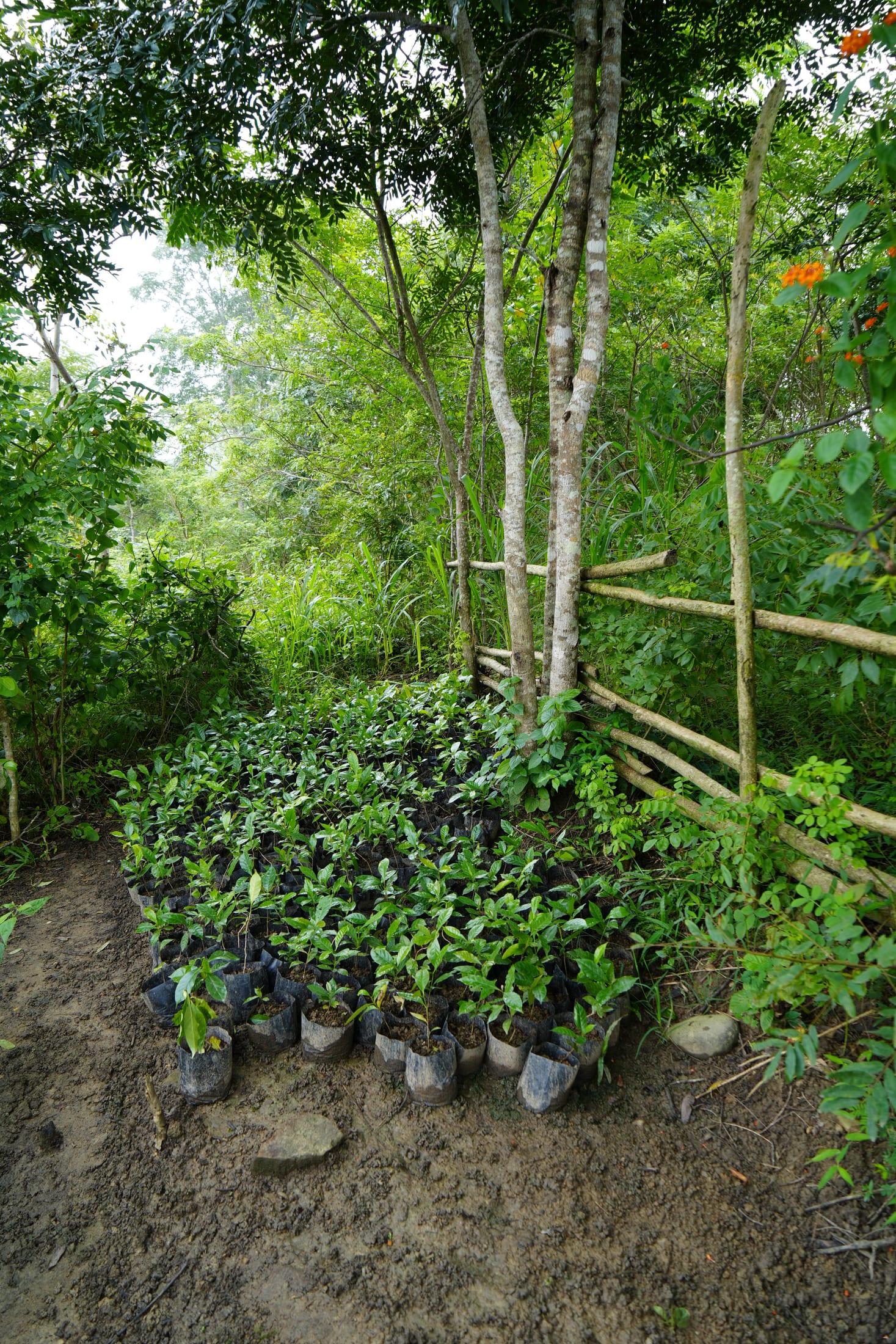
Polybag seedlings at a community tree nursery, February 2026. Each year's nursery production feeds the next planting cycle of the kebun tetap system; by March 2026 the network counted 360,425 trees planted across 24 villages.
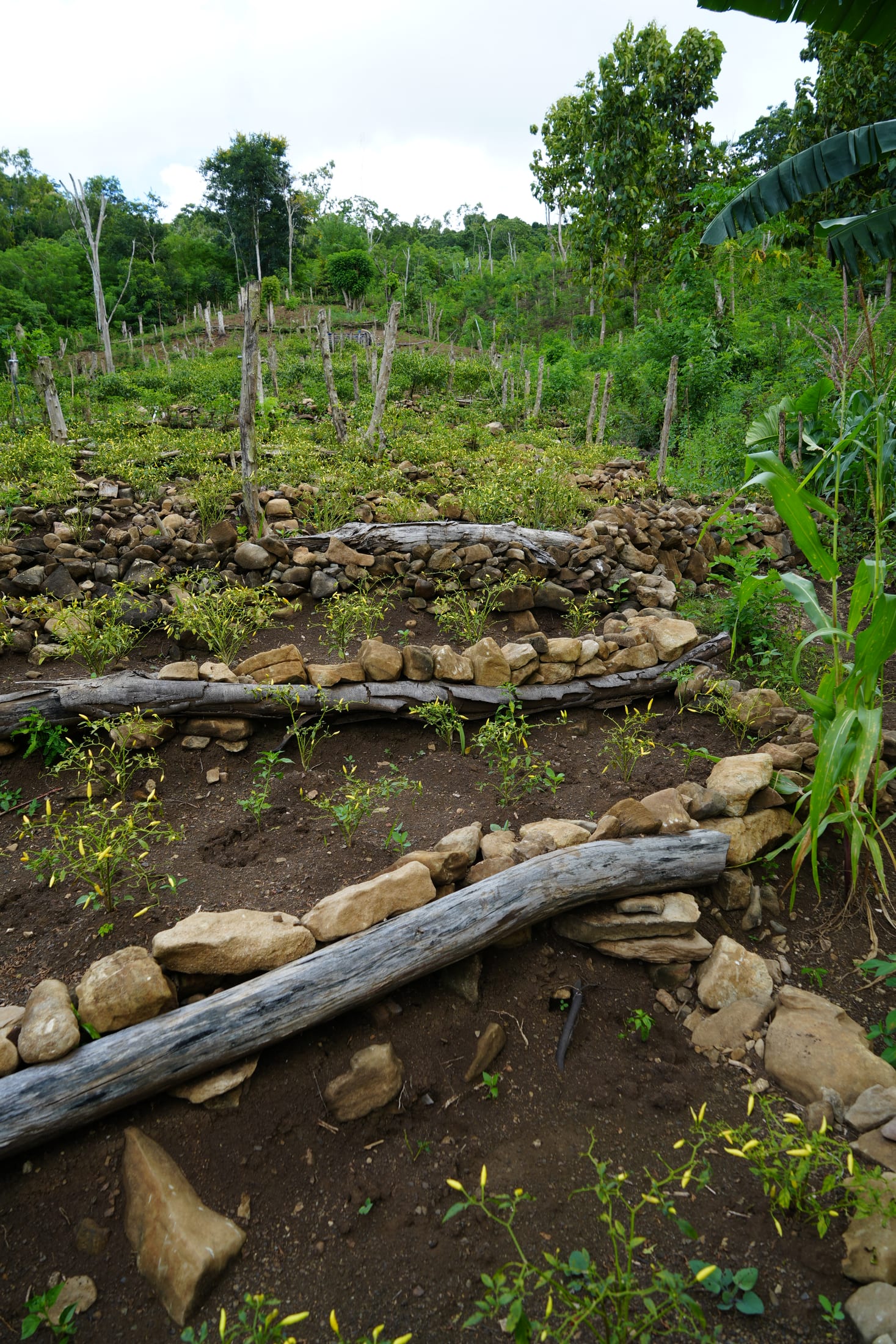
Stone-and-timber terracing on a hillside kebun tetap, February 2026. The community-built terracing system is part of a network that has planted 360,425 trees across 548.41 hectares in 18 of the 24 study villages, integrating fruit, fodder, fuelwood, and indigenous food crops.
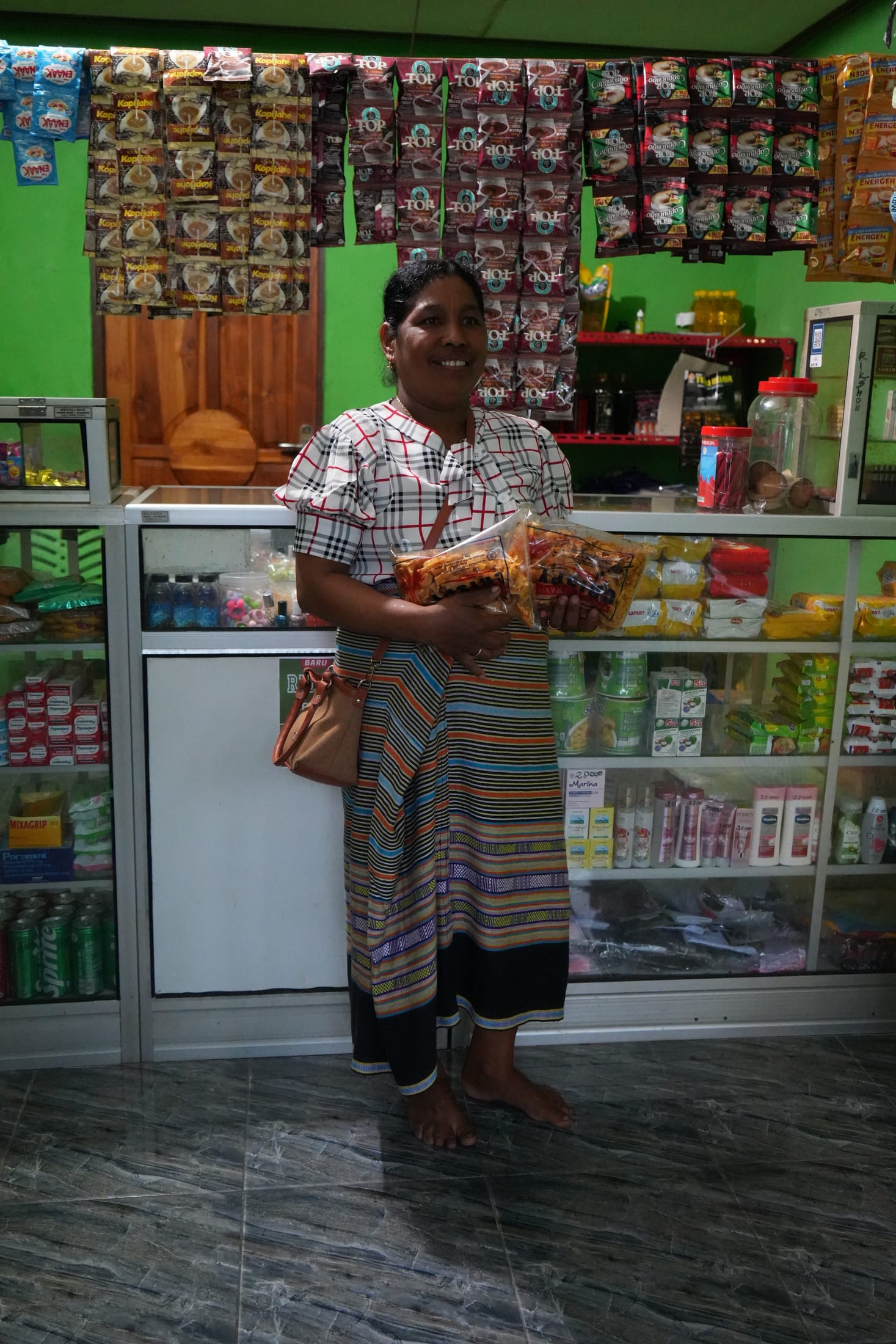
A village shopkeeper in her UBSP-financed warung, February 2026. The retail enterprise was capitalised through her community savings group; together the 45 groups across the 24-village network hold IDR 2.49 billion in member-managed capital, recycled into food gardens, livestock, and small-trade enterprises like this one.
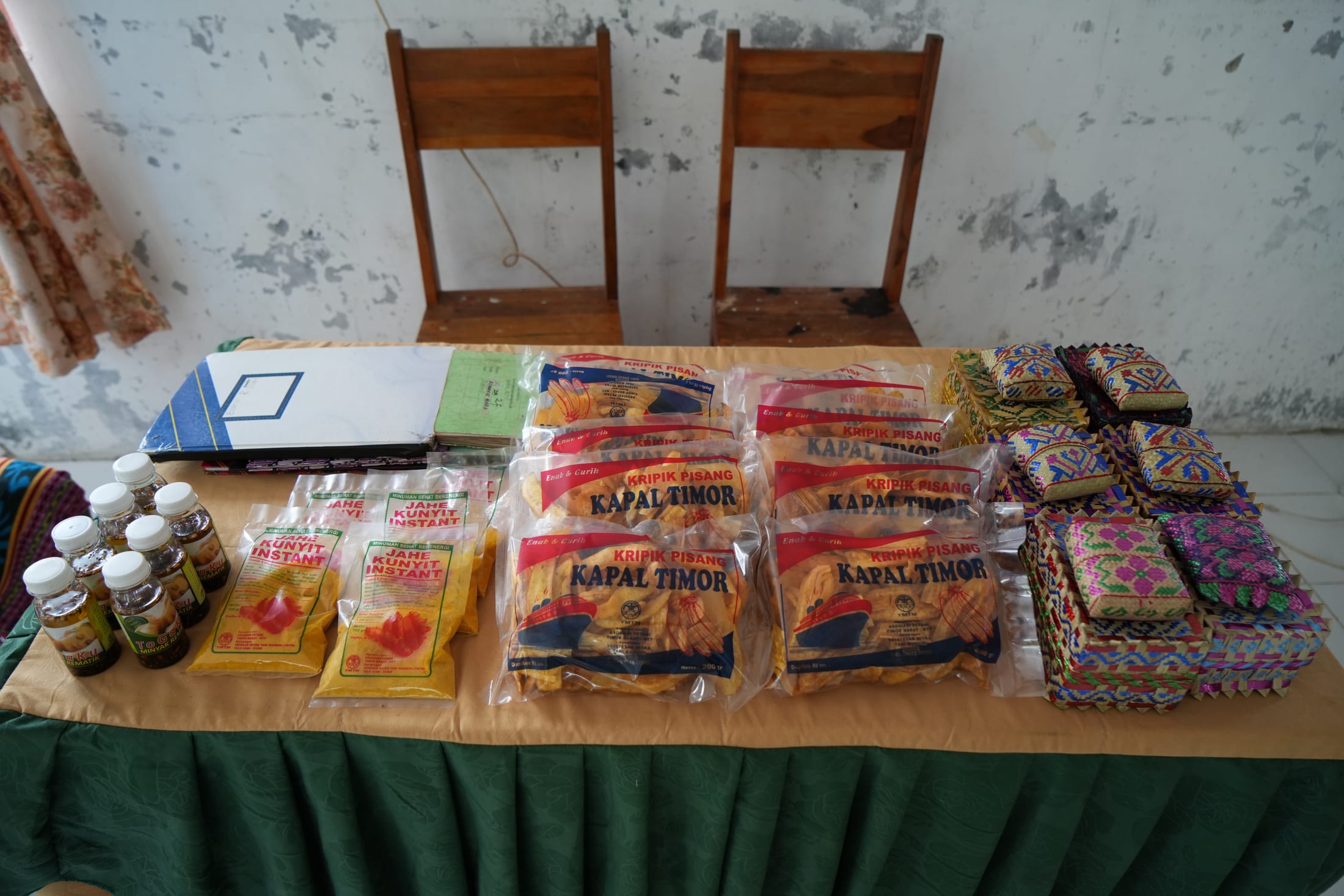
Products of the community savings-group economy on display, February 2026. Kapal Timor banana crisps, kunyit instan (instant turmeric), and woven crafts are produced by households whose working capital is recycled through 45 community savings groups across 24 villages.
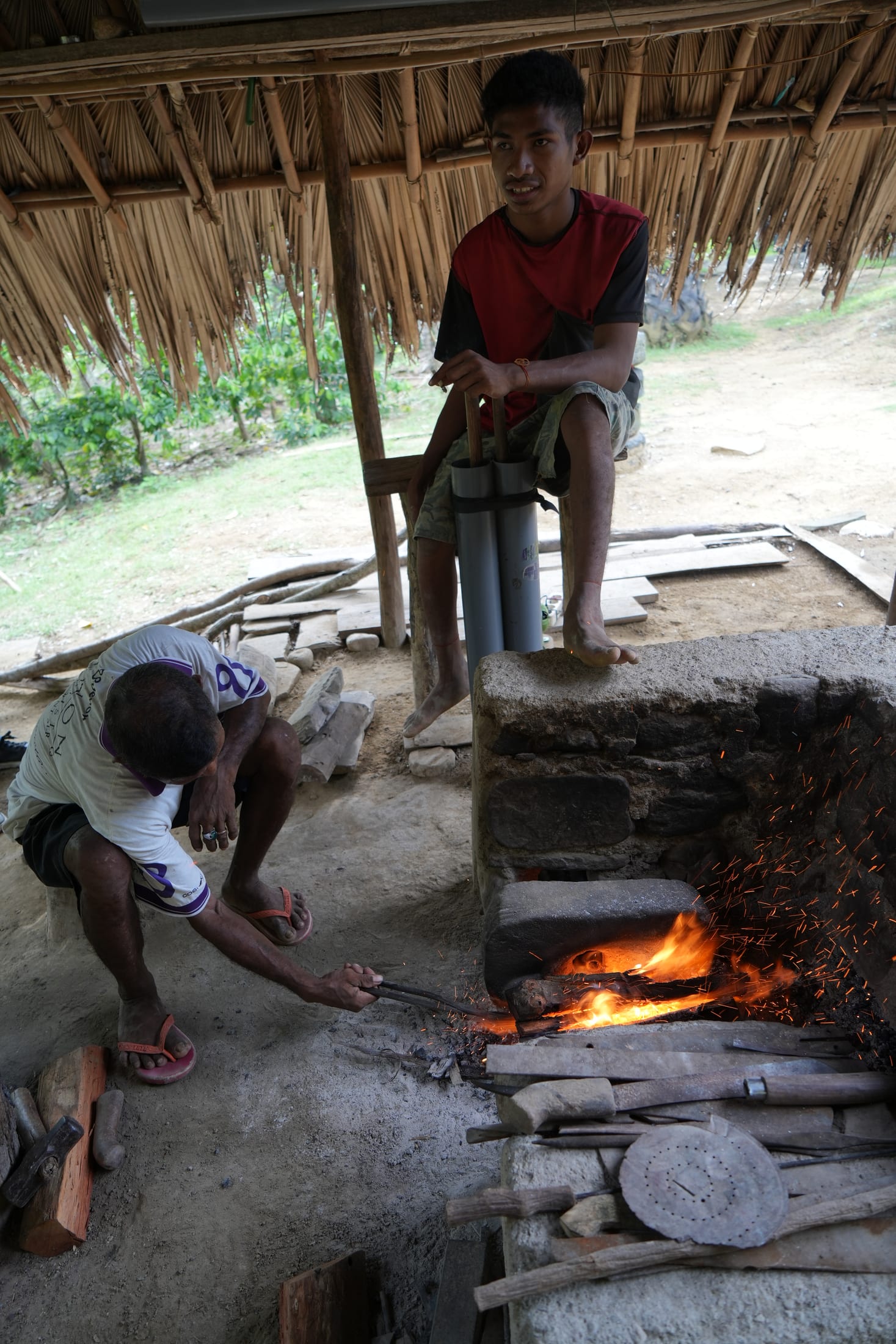
A traditional parang forge, February 2026. Blades for farm work and household use are hand-forged here, fired with charcoal made from locally gathered hardwoods. Like the weaving dyes and the household garden materials shown elsewhere in this series, this is one of several craft economies that depend on the forest zones the banu prohibitions protect.
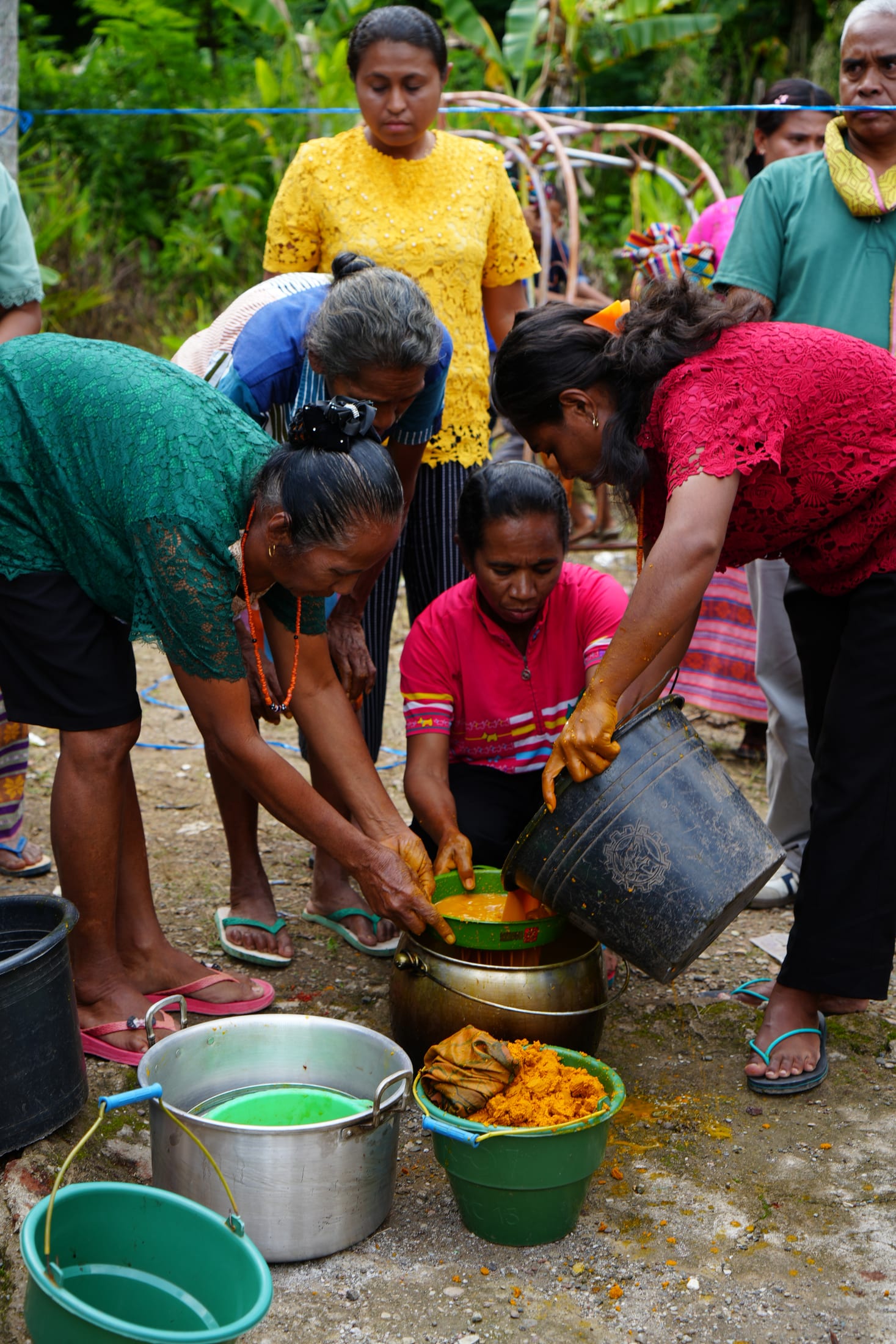
Women of a weaving group preparing natural dyes for kain tenun production, February 2026. The dye plants are gathered from the forest zones the customary banu prohibitions protect, then cooked down by hand in the workshop. The work is collective, recurring, and largely invisible in the formal economic accounts of the same villages.
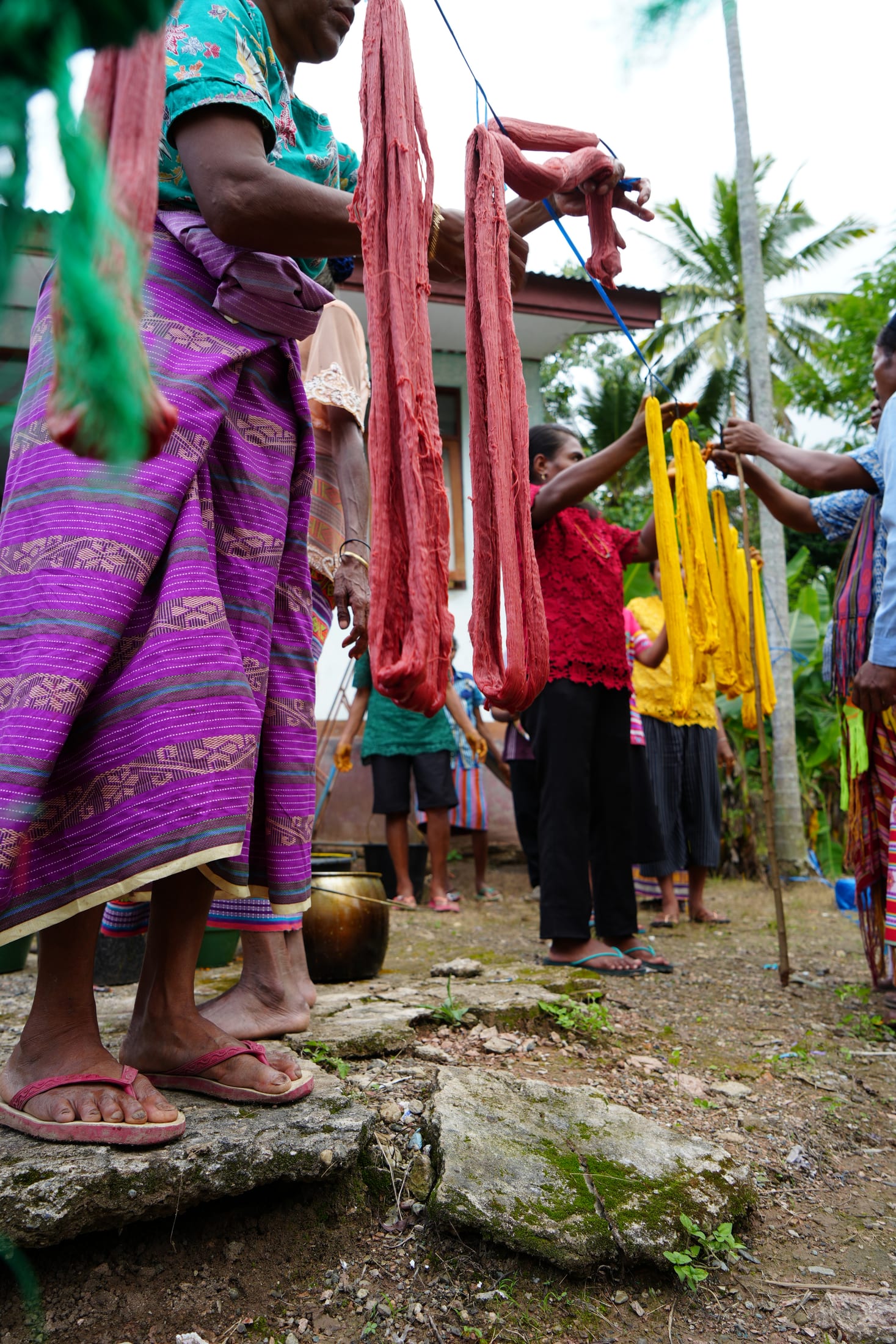
Natural dye baths and prepared materials at the same workshop, February 2026. From these basins the colours are fixed onto the yarn skeins shown later in this series. The complete chain from forest plant to woven cloth runs on women's-group and household labour, knowledge transmitted outside any formal training system.
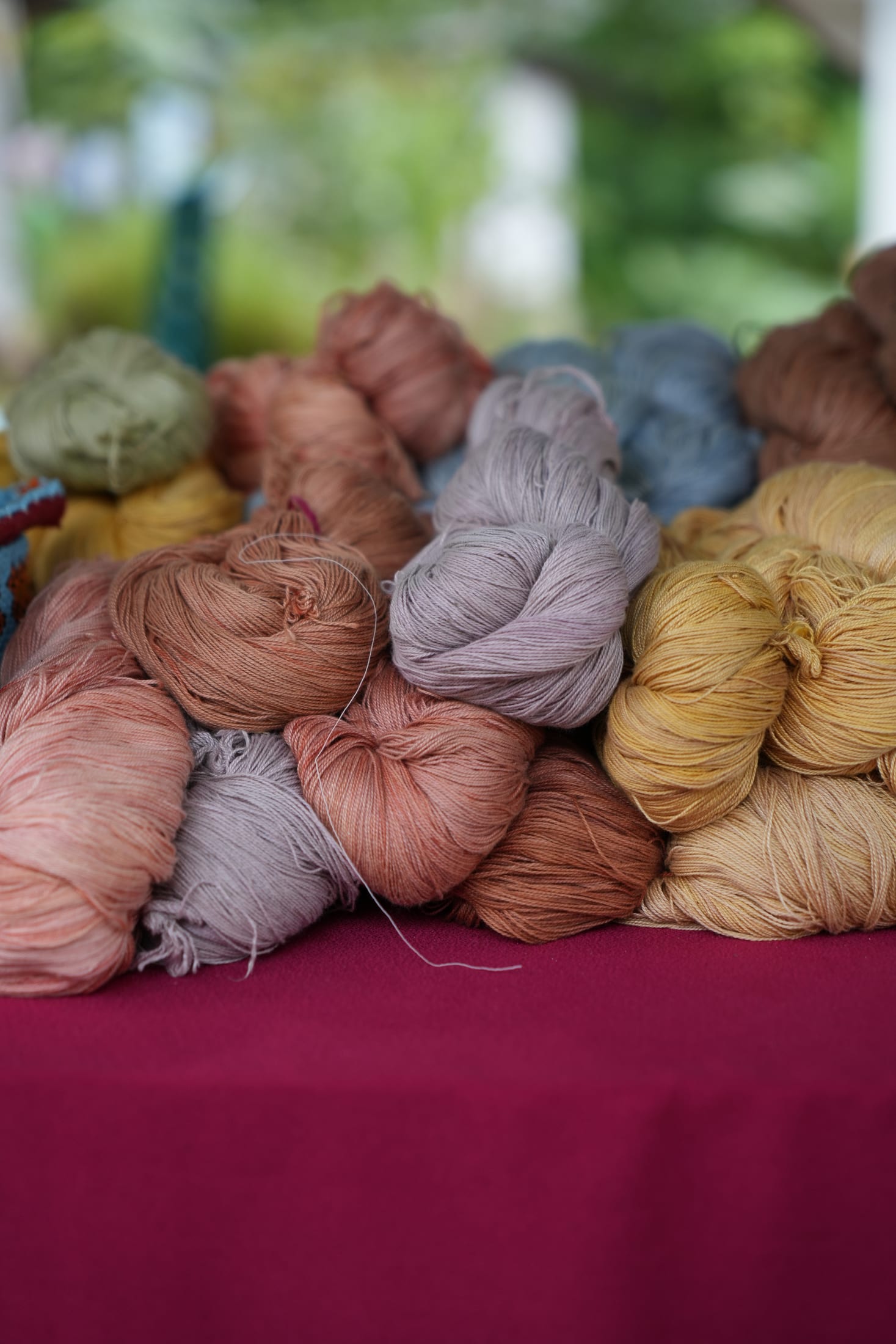
Natural-dyed yarn skeins ready for the looms, February 2026. The dye plants that produce these colours grow in the forest zones the Atoni Meto banu prohibitions protect, a working illustration of why this customary system is, in plain economic terms, the precondition for an entire textile economy.
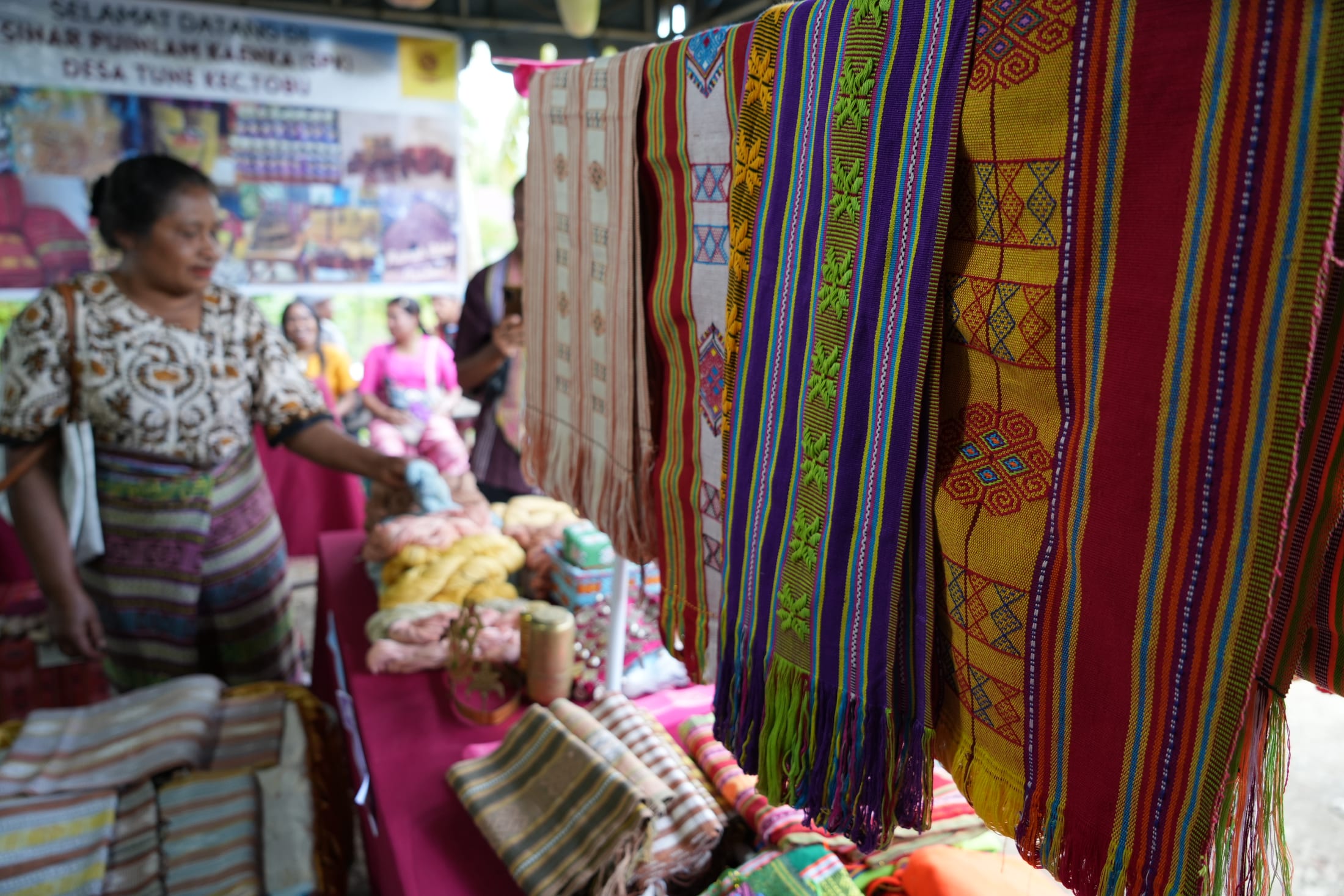
Textiles of the Mentari women's weaving group on display at a market, February 2026. The group's woven cloths were exhibited in Italy in 2025; the natural dyes used in this production depend on plants protected by the customary banu prohibitions of the surrounding forest.
All images are shared with the prior consent of the customary councils and the individuals shown. Imagery is reviewed for community sign-off before publication; sacred-site and ritual-restricted images are held in restricted archives only. Personal names of community members are withheld in accordance with the research-participant protection protocol of Yayasan Mitra Tani Mandiri and Caritas Australia / DFAT-ANCP; descriptive roles are used in their place.